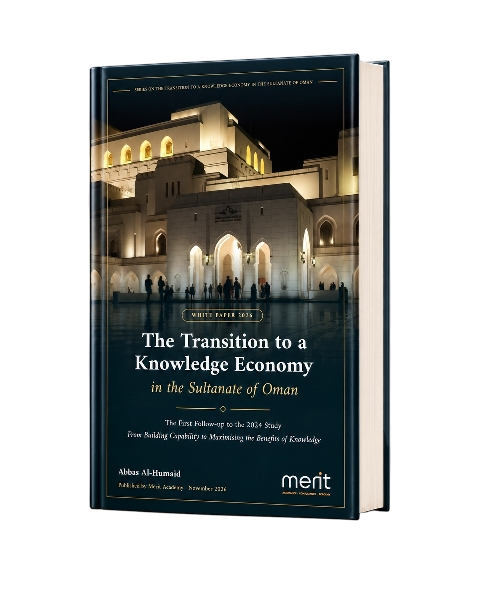
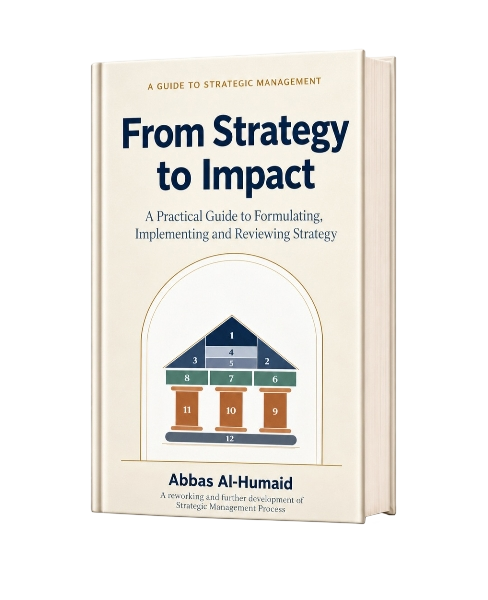
What This White Paper Offers
● An evidence-based review of developments since the 2024 study through 26 October 2026, distinguishing approved frameworks, actual implementation and documented outcomes.
Who This White Paper Is For
● Policymakers, national decision-makers and those involved in Oman Vision 2040 and the Eleventh Five-Year Plan.
From the Author’s Foreword
“The question today is therefore: How do we benefit from what has been built? What prevents some of those benefits from reaching their intended users?”
Research and Methodological Basis
This is the first follow-up to A Proposed Strategy for the Transition to a Knowledge Economy in the Sultanate of Oman (2024) , launching a biennial review series. It draws on published sources and official documents, distinguishing documented information from interpretation and proposals. No new field surveys, interviews or market tests were undertaken. Implementation arrangements are therefore presented for verification and consideration by the competent authorities, not as policies already adopted. The paper also recognises that general education and basic research have wider purposes and longer time horizons than immediate commercial returns.
From Capability to Use and Outcomes
The paper distinguishes building knowledge and capability from their productive use and from measurable improvements in quality, productivity, income and services. Assessing additional impact requires an appropriate reference scenario, not merely observing change.
The Six Proposed National Directions
1. Education, competence and productive use : 2. Developing the knowledge-services market at home and abroad : 3. Strengthening enterprise capability and productivity : 4. Strengthening research, innovation and the transition of knowledge into use : 5. Completing the enabling regulatory, financial and digital environment : 6. National coordination, measurement and learning :